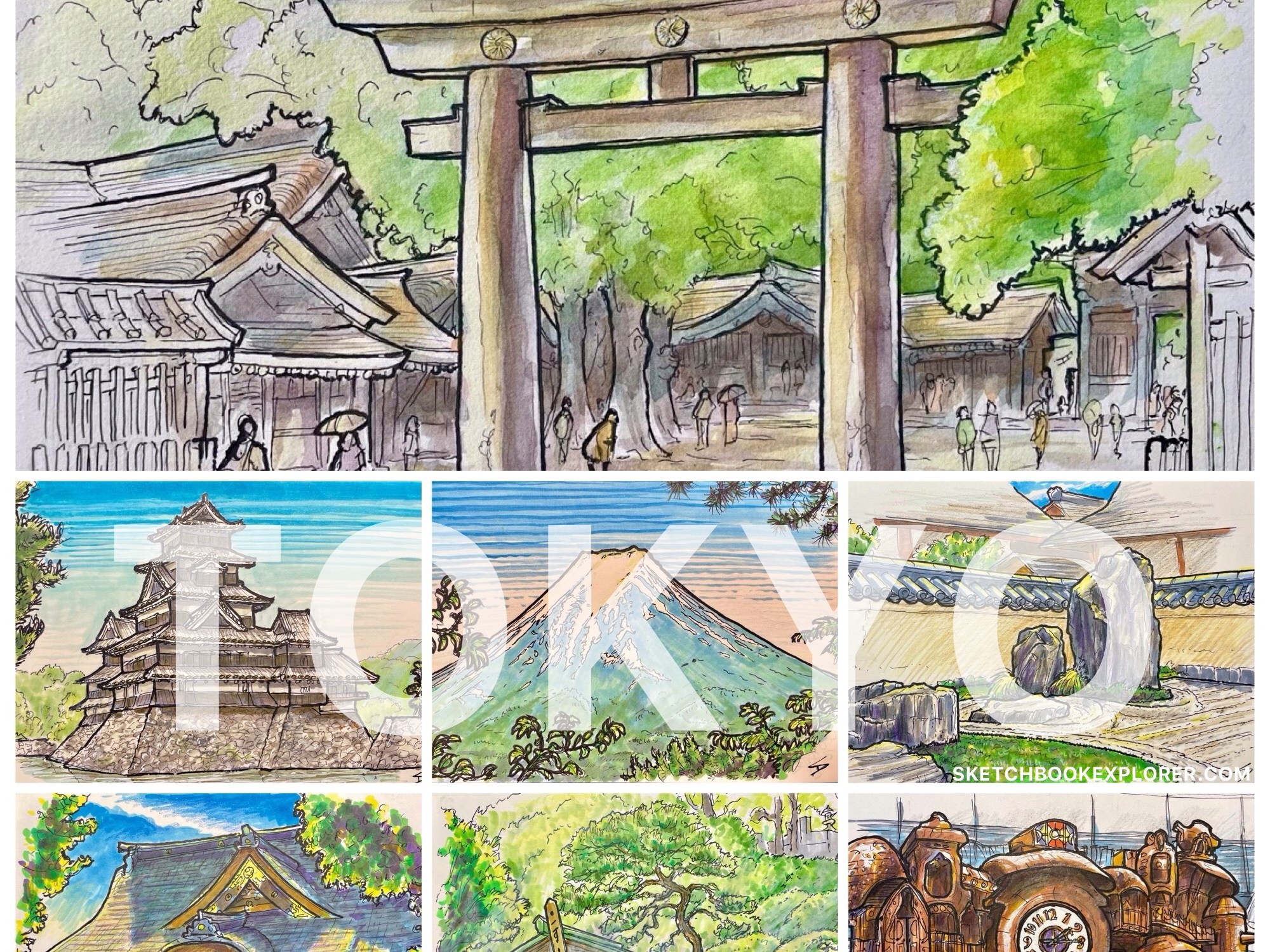
Mostly Tokyo, a little beyond — 22 travel sketches capturing 19 days of art adventures, from neon streets to Mount Fuji and Kyoto’s temples.
I’ve always been drawn to the incredible blend of old and new in Japan, where ancient temples stand alongside futuristic skyscrapers. As a Sketchbook Explorer, I knew I had to return to Tokyo, this time with a new mission: to fill a sketchbook with the sights, sounds, and soul of the city. This 19-day journey, captured in 22 unique sketches, took me from the bustling heart of the metropolis to tranquil temples and iconic mountains, and even brought me face-to-face with a legendary robot.
Join me as I share this travelogue, filled with art, useful tips, and the amazing people who make Japan so special. I’ll walk you through my adventures, day by day and sketch by sketch.
- Toyokawa Inari Betsuin Temple
- Isetan Shinjuku Department Store
- Akihabara
- Shibuya Crossing
- Zoshigay Kishimojin Temple
- Senso-ji Temple
- Meiji Shrine
- Statue of Liberty – Odaiba Island
- DiverCity Tokyo Plaza
- Sengaku-ji Temple
- Tokyo Japanese Sword Museum
- Arisugawanomiya Memorial Park
- Miyazaki Nippon Clock
- Gotokuji Temple
- Tokyu Plaza Harajuku
- Tokyo National Museum
- Miyamoto Unosuke Shoten
Day 1: Finding My Tools and Capturing a Classic
My first stop was Sekaido Shinjuku, a true paradise for any artist. This five-story art supply store is the largest in the world, and I quickly found myself overwhelmed by the sheer variety of materials. From traditional Japanese brushes to manga and anime supplies, it’s a place where you can get lost for hours.
My Art Haul: I picked up a selection of pen brushes, a metal-tipped pencil, various pens, and a large set of colored marker pens. The weak yen was a definite bonus!
With my new supplies in hand, I stumbled upon an Aramco Aston Martin Formula One showroom. Inside, a stunning vintage car caught my eye. They graciously allowed me to sketch it, so long as I didn’t take photos or film inside.
Sketch 1: A Vintage Aston Martin: Timeless Beauty in Tokyo

- Media: Pencil, Pen, Colour Marker pens
- Location: Aramco Aston Martin Formula One showroom, near Shinjuku.
As the day began to fade, I discovered the serene Toyokawa Inari Betsuin Temple. Founded by the Soto Buddhist sect in 1441, it was the perfect place to do one last sketch. The light at dusk beautifully illuminated the temple, creating an inspiring atmosphere for my final drawing of the day.
Sketch 2: Mystical Gateways: A Sketch of Toyokawa Inari Betsuin Temple
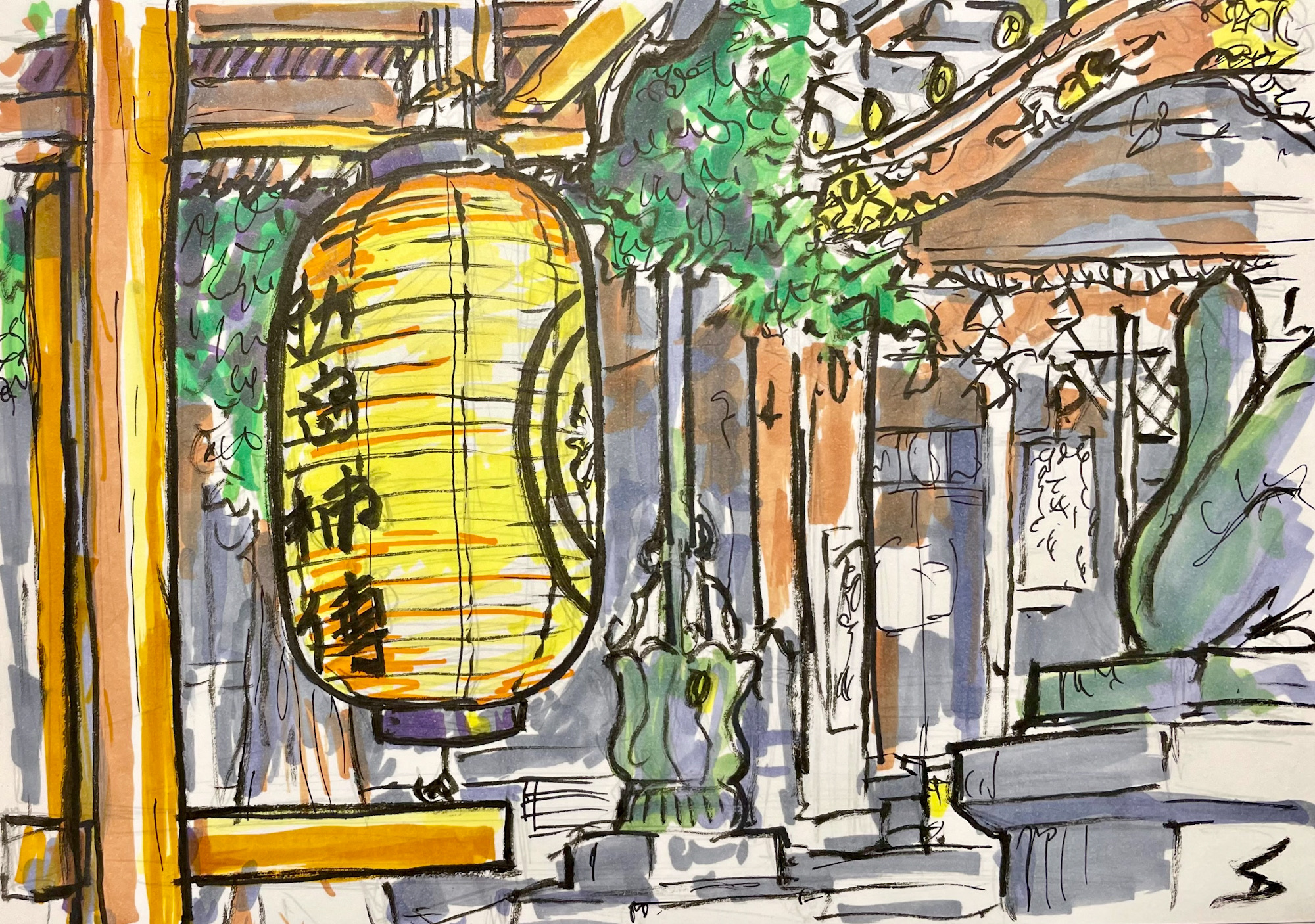
- Media: Pencil, Pen, Colour Marker pens
- Location: Toyokawa Inari Betsuin Temple, Tokyo.
How to Get There:
- By Train: Take the Tokyo Metro Ginza Line to Akasaka-Mitsuke Station (G05).
- From the Station: The temple is a short 5-minute walk from the station. Take the “A” or “D” exit and follow the main road until you see the temple entrance.
Day 2: A Feast for the Eyes (and Stomach)
I returned to a grand building I’d seen the day before, which turned out to be the Isetan Shinjuku department store. I’m so glad I went inside! The basement level is a massive food hall that is a true work of art in itself. The beautifully decorated Japanese sweets were almost too pretty to eat—almost!
I bought a selection of “Bellamere” sweets and, of course, had to sketch them before I ate them. Trust me, they tasted as good as they looked. The Isetan flagship store has been around since 1886 and still has a traditional Kimono Salon on the seventh floor, a nod to its origins.
Sketch 3: Sweet Masterpieces: Japanese Delicacies at Isetan Shinjuku
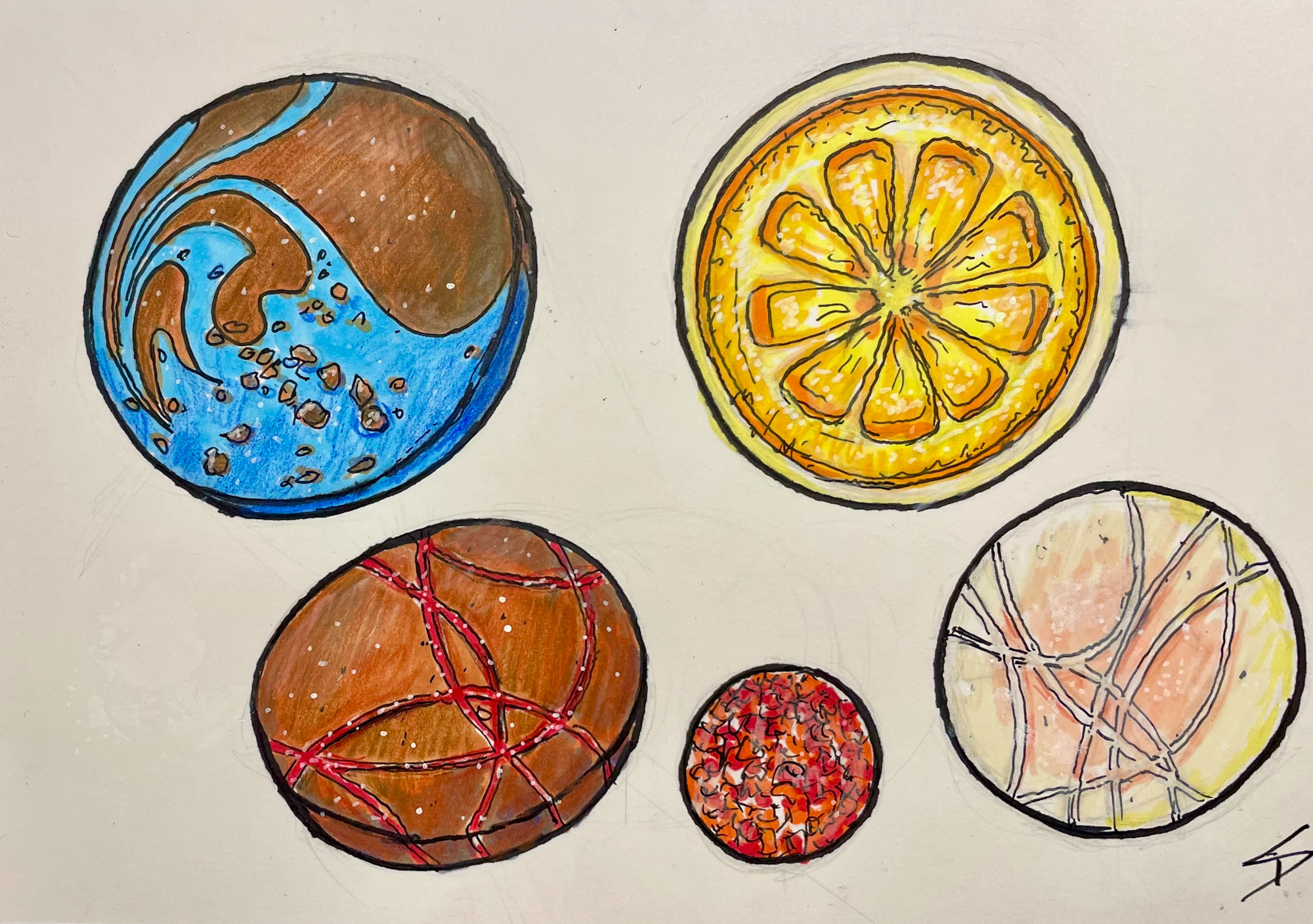
- Media: Pencil, Pen, Colour Marker pens
- Location: Isetan Shinjuku Department Store, Tokyo.
How to Get There:
- By Train: Take the Tokyo Metro Marunouchi Line to Shinjuku-sanchome Station (M09).
- From the Station: The department store is directly connected to the station via an underground walkway. Look for signs pointing to Isetan in the main concourse.
Day 3: A Day Trip to Majestic Mount Fuji
For my first bonus day trip, I took a train to Fujiyoshida to get a perfect view of the iconic Mount Fuji. It had been years since I’d visited, and I was determined to find the ideal spot for a sketch. The town itself is charming, with a quaint main street that offers its own unique view of the mountain.
I made my way to the famous Chureito Pagoda in Arakurayama Sengen Park, accessible by 398 steps. While the view from the pagoda is incredible, it was crowded with tourists. I wanted a quiet spot to sketch, so I climbed a little higher. This turned out to be the best decision, as I quickly found a peaceful spot away from the crowds.
As I sketched, I felt inspired by the great Japanese artist Katsushika Hokusai and his Thirty-six Views of Mount Fuji. I tried to add a bit of his style into my own drawing, such as the woodblock-like lines in the sky and the exaggerated angles of the mountain.
Sketch 4: Gazing at the Icon: A View of Mount Fuji from Fujiyoshida

- Media: Pencil, Pen, Colour Marker pens
- Location: Arakurayama Sengen Park, Fujiyoshida.
How to Get There:
- By Train: From Tokyo, take the JR Chuo Line from Shinjuku to Otsuki Station (around 1 hour). At Otsuki, transfer to the Fujikyuko Line to Shimo-Yoshida Station.
- From the Station: The park is about a 10-minute walk from Shimo-Yoshida Station. Follow the signs to the park entrance and prepare to climb the 398 steps to the pagoda.
Day 4: Akihabara – A Geek’s Paradise
I ventured into Tokyo’s “otaku” heartland: Akihabara. Known as “Electric Town,” the area is a sensory overload of neon lights, huge electronic stores, and classic Japanese arcades.
The Mandarake manga and anime store is a must-visit for any fan. I also couldn’t resist trying my luck with the ubiquitous toy capsule machines. I found a tiny Gundam figure, a fun foreshadowing of what was to come later in my trip.
I found a spot to sketch in the busiest part of Akihabara, standing up amidst the crowds. It’s a skill you learn as a Sketchbook Explorer—sometimes you just have to get comfortable sketching in a crowd!
Sketch 5: Neon Dreams: The Electric Energy of Akihabara
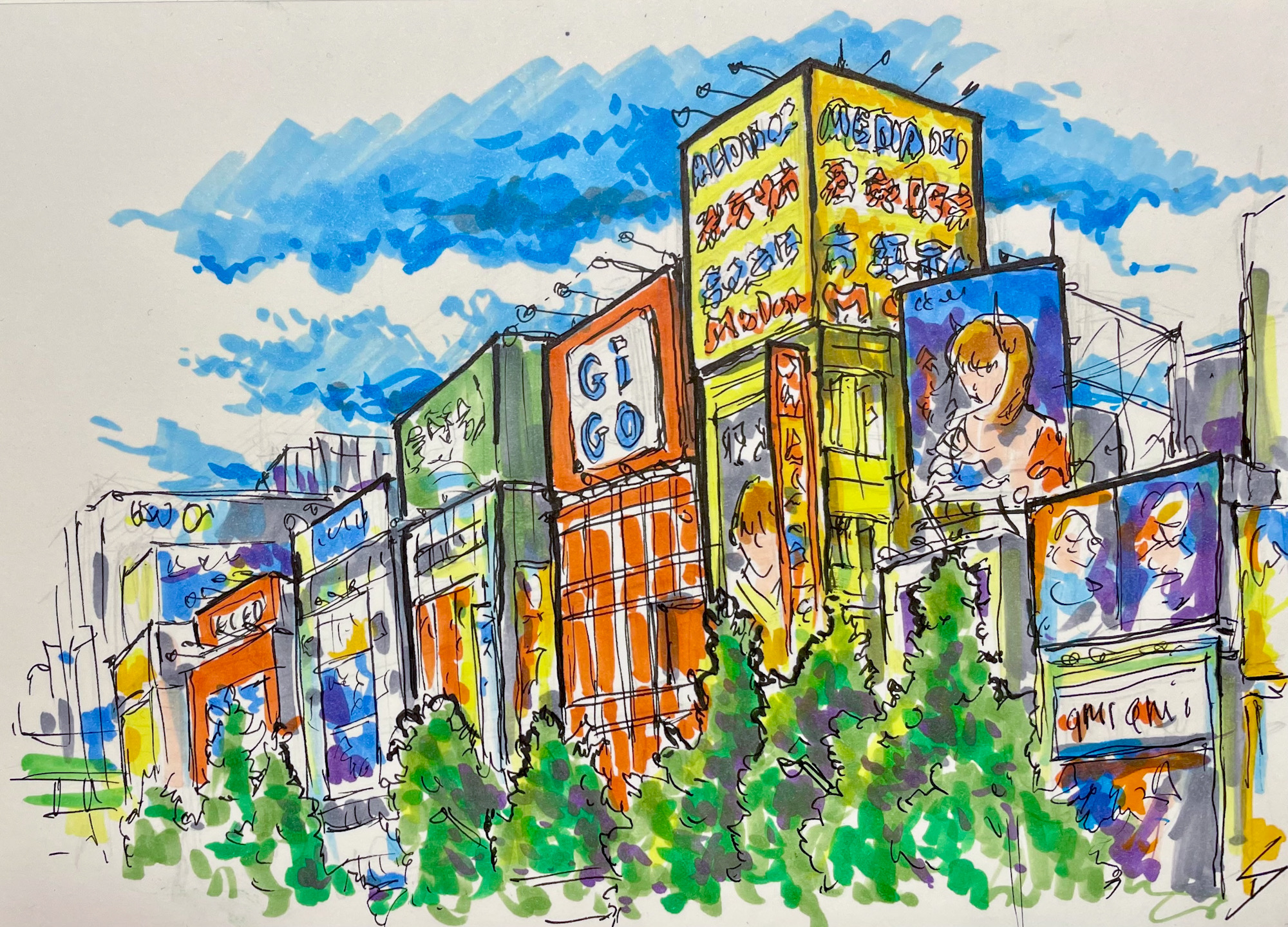
- Media: Pencil, Pen, Colour Marker pens
- Location: Akihabara, Tokyo.
How to Get There:
- By Train: Take the JR Yamanote Line, JR Chuo-Sobu Line, or Tokyo Metro Hibiya Line to Akihabara Station.
- From the Station: The main street, Chuo Dori, is right outside the station’s Electric Town Exit.
Days 5 & 6: The Yin and Yang of Tokyo
I dedicated two days to exploring the extremes of Tokyo: the bustling chaos of Shibuya and the serene tranquility of a hidden temple.
I started at the famous Shibuya Crossing, one of the busiest intersections in the world. My first attempt to sketch it was from a café, but the angle didn’t quite capture the vibrant energy. So, I found a new vantage point from a walkway connected to Shibuya Station, where I sketched while standing in the midst of the crowds. I added some finishing touches with colored pencils to capture the bleeding light from the streetlights.
Sketch 6: The Famous Shibuya Crossing, Part 1: A Café View
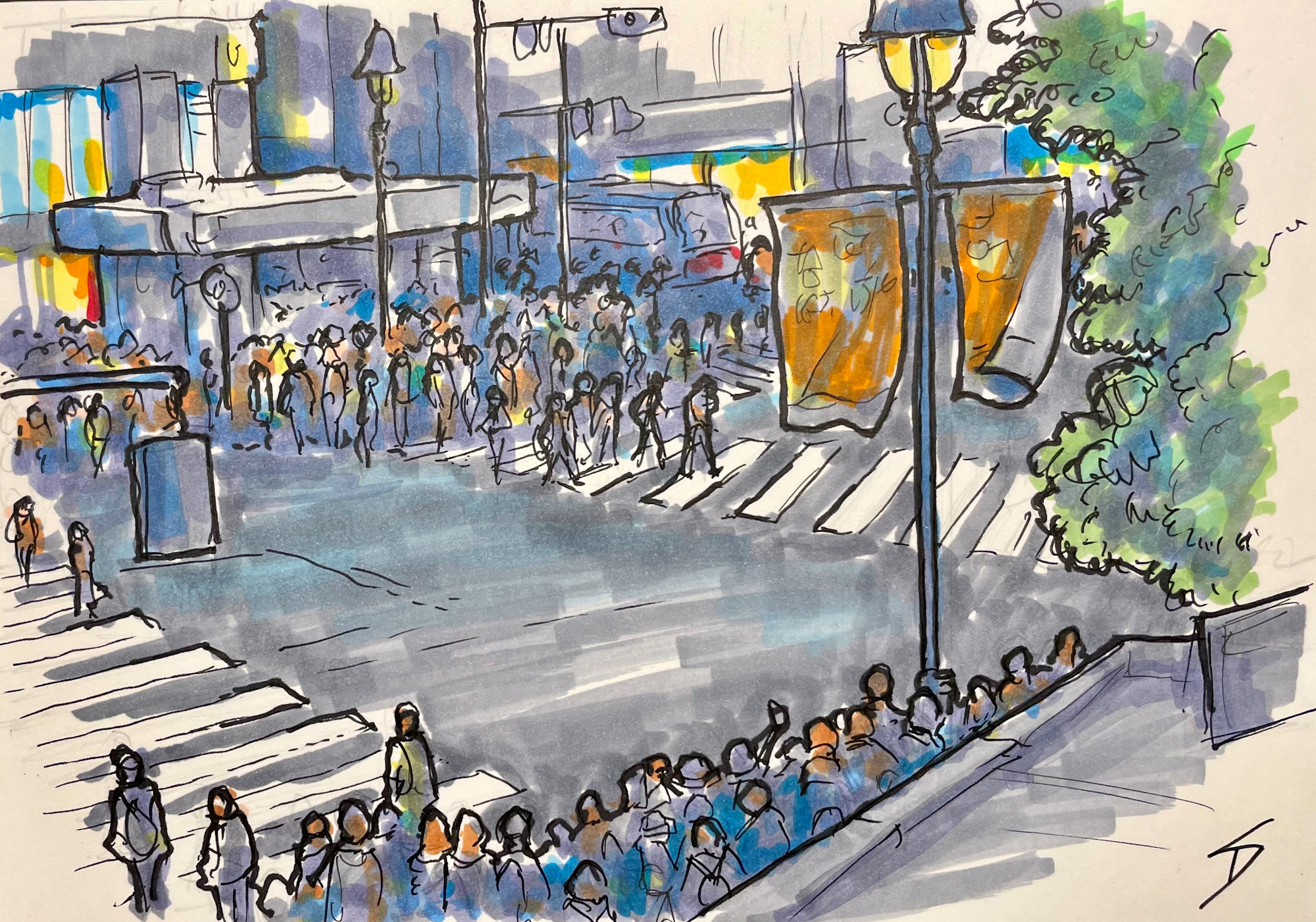
- Media: Pencil, Pen, Colour Marker pens
- Location: Shibuya, Tokyo.
How to Get There:
- By Train: Take the JR Yamanote Line, JR Saikyo Line, JR Shonan Shinjuku Line, or Tokyo Metro Ginza, Hanzomon, or Fukutoshin lines to Shibuya Station.
- From the Station: Use the Hachiko Exit. The crossing is right in front of the station. Most cafes offering views are located in nearby buildings like the Starbucks in Shibuya Scramble Square.
Sketch 7: The Famous Shibuya Crossing, Part 2: Standing in the Crowds
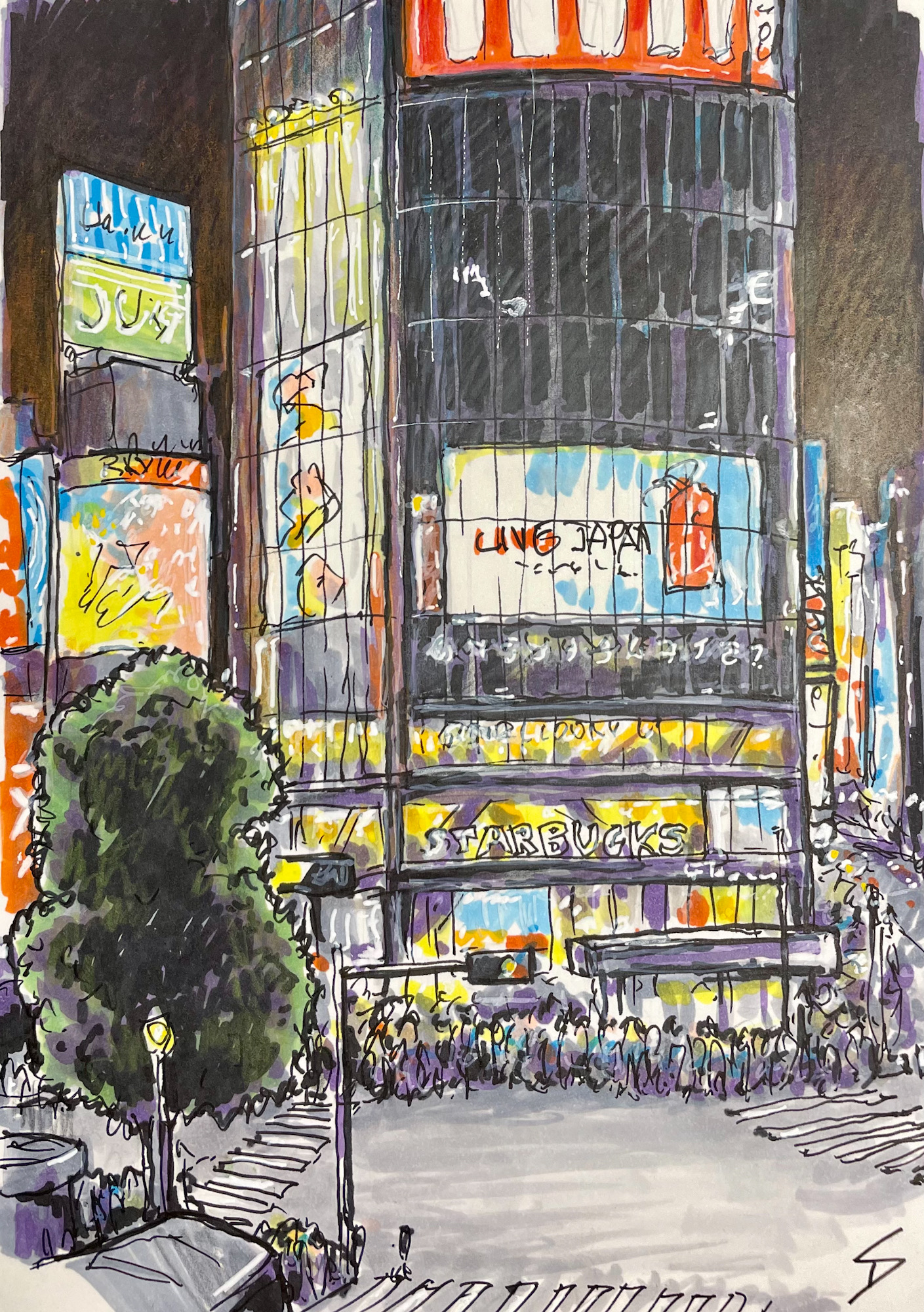
- Media: Pencil, Pen, Colour Marker pens
- Location: Shibuya Station, Tokyo.
How to Get There:
- By Train: See directions above.
- My Sketching Spot: I found my second spot on the pedestrian walkways connecting the station to nearby buildings, which offer a great elevated view of the entire crossing.
Next, I sought out the opposite side of Tokyo at the Zoshigay Kishimojin Temple. I had sketched here before, and knew it was a peaceful oasis. This time, however, the temple grounds were filled with an arts and crafts fair, a delightful and welcome surprise! As I sketched, I felt incredibly privileged to be in such a beautiful, authentic location on such a gorgeous day. The temple, built in 1578, also features red torii gates from the nearby Takeyori Inari Shrine.
Sketch 8: Tranquil Tokyo: Discovering Zoshigay Kishimojin Temple

- Media: Pencil, Pen, Colour Marker pens
- Location: Zoshigay Kishimojin Temple, Tokyo.
How to Get There:
- By Train: Take the Tokyo Metro Fukutoshin Line to Zoshigaya Station (F10).
- From the Station: The temple is a 5-minute walk from the station. Take the “A” exit and look for the stone lanterns that mark the path to the temple grounds.
Days 7 & 8: Temples vs. Shrines
I wanted to dive into the differences between Buddhist temples and Shinto shrines.
First up was the Senso-ji Temple in Asakusa, Tokyo’s oldest temple, dating back to 628 AD. It’s the most visited religious site in the world, and on this day, it was packed due to Golden Week! Buddhist temples often feature grand gate houses and pagodas, and I had to find a quiet corner to sketch amidst the crowds.
Sketch 9: A Sea of Tourists: The Pagoda at Senso-ji Temple
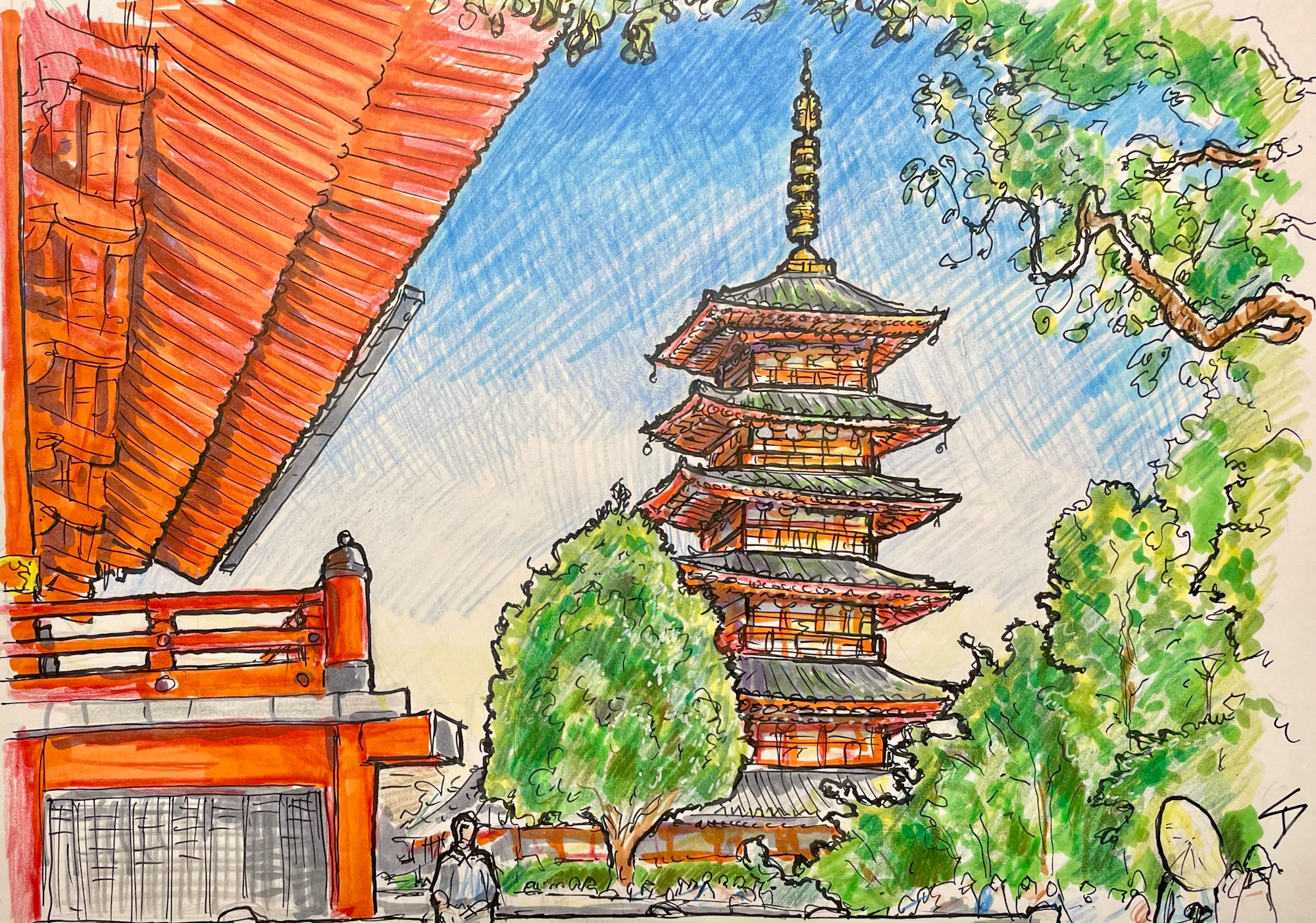
- Media: Pencil, Pen, Colour Marker pens, and color pencils
- Location: Senso-ji Temple, Asakusa.
How to Get There:
- By Train: Take the Tokyo Metro Ginza Line to Asakusa Station (G19), or the Toei Asakusa Line to Asakusa Station (A18).
- From the Station: The temple is a short 5-minute walk from the station. Follow the crowds along Nakamise-dori, a street lined with traditional souvenir shops and food stalls, to the main temple grounds.
The next day, I explored the Meiji Shrine, a Shinto shrine dedicated to Emperor Meiji and Empress Shoken. The complex is surrounded by large torii gates, a hallmark of Shinto shrines. As I was finishing my drawing, a security guard told me sketching was not allowed—a puzzling rule given Japan’s love for art. I had to finish the watercolor work in a nearby park.
Sketch 10: The Majestic Meiji Shrine: A Sketch Before the Ban

- Media: Pencil, Pen, watercolour
- Location: Meiji Shrine, Tokyo.
How to Get There:
- By Train: Take the JR Yamanote Line to Harajuku Station.
- From the Station: Use the Omotesando exit. The entrance to the shrine is directly across the street from the station. My final sketching spot was in the nearby Yoyogi Park, which is a great alternative if you want to capture the atmosphere without breaking the rules.
Day 9: Giant Statues in Odaiba
On Day 9, I explored Odaiba Island, a man-made island in Tokyo Bay. My mission was to sketch the life-sized Gundam statue, but I was surprised to find another giant on the harbor front: a replica of the Statue of Liberty!
Locals and tourists alike were incredibly friendly and interested in my art, which is something I always love about sketching in Japan. After sketching Lady Liberty, I made my way to the Gundam statue. Just as I was about to add color, the robot came to life, changing its armor colors! Luckily, I had a reference photo to finish the piece.
Sketch 11: An American Icon in Tokyo: The Statue of Liberty
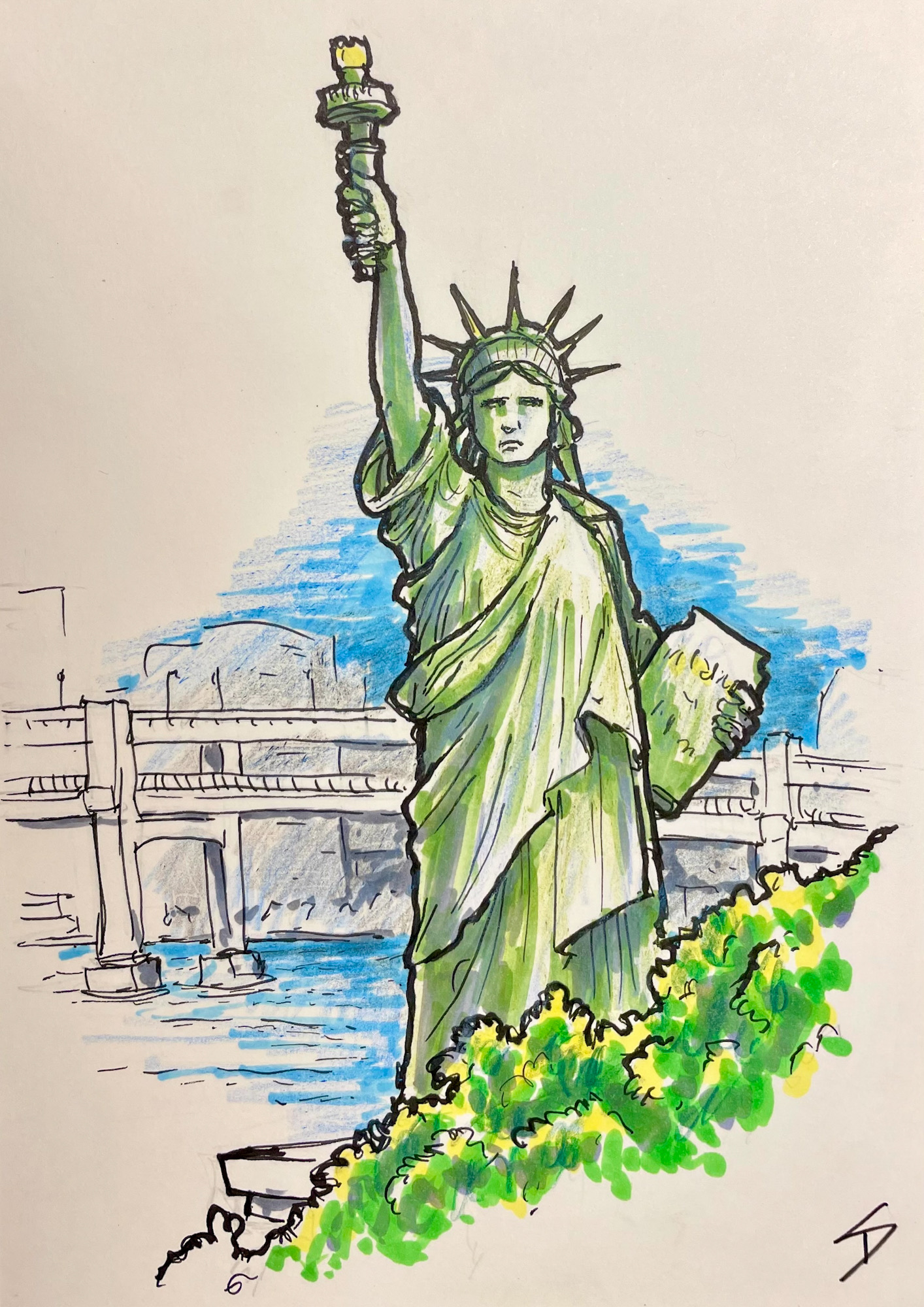
- Media: Pencil, Pen, Colour Marker pens
- Location: Odaiba Island, Tokyo.
How to Get There:
- By Train: Take the Yurikamome Line to Odaiba-Kaihinkoen Station (U06).
- From the Station: The Statue of Liberty is a short walk from the station, located on the waterfront overlooking Rainbow Bridge.
Sketch 12: The Giant Awakens: A Sketch of Tokyo’s Life-Sized Gundam

- Media: Pencil, Pen, Colour Marker pens
- Location: DiverCity Tokyo Plaza, Odaiba.
How to Get There:
- By Train: Take the Yurikamome Line to Daiba Station (U07).
- From the Station: The Gundam statue is located in front of DiverCity Tokyo Plaza, a short walk from the station.
Day 10: Another Bonus Day Trip to Kyoto
I took the bullet train to Kyoto for another day trip. I knew it would be busy, so I sought out some lesser-known spots. While the Kinkaku-ji Temple and the Arashiyama Bamboo Forest were packed with tourists, they were still breathtaking to see.
My favorite part of the day was visiting the serene Daitoku-ji temple complex, which is a series of smaller Zen temples. I returned to my favorite one, the Ryogen-in temple, to do a full-color sketch of the beautiful Japanese stone gardens. Sketching here felt like a form of meditation, as I focused on the rocks and combed sand that represent islands and oceans.
Sketch 13: Meditative Moments: The Zen Garden of Ryogen-in Temple

- Media: Pencil, Pen, Colour Marker pens
- Location: Ryogen-in Temple, Kyoto.
How to Get There:
- By Train: From Tokyo Station, take the Tokaido-Sanyo Shinkansen (bullet train) to Kyoto Station (around 2 hours, requires a JR Pass or individual ticket).
- From Kyoto Station: Take the Kyoto City Bus #206 to the Daitoku-ji-mae bus stop. From there, it’s a short walk to the temple complex.
Day 11: The Legend of the 47 Ronin
On Day 11, I visited the Sengaku-ji Temple, the final resting place of the legendary 47 Ronin. These masterless samurai avenged their lord’s death before committing ritual suicide, a powerful tale of loyalty and honor. The graves, some belonging to mere teenagers, were a popular pilgrimage site. I laid burning incense at each one, marveling at the calm and serene atmosphere.
Sketch 14: Honor and History: The Graves of the 47 Ronin
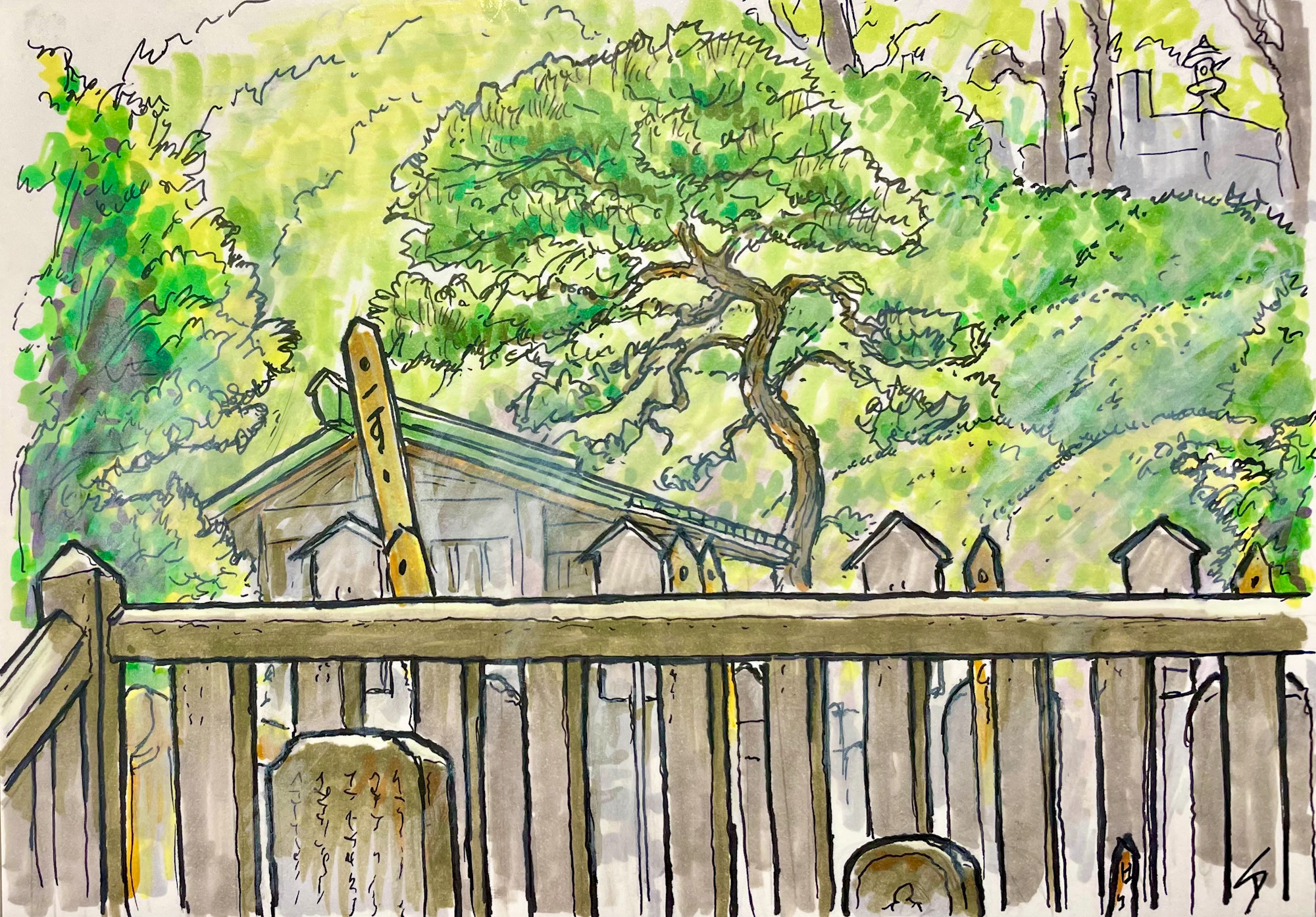
- Media: Pencil, Pen, Colour Marker pens
- Location: Sengaku-ji Temple, Tokyo.
How to Get There:
- By Train: Take the Toei Asakusa Line or the Keikyu Main Line to Sengakuji Station (A07).
- From the Station: The temple is a short 2-minute walk from the station. Look for the large red gate that marks the entrance.
Day 12: The Art of the Samurai Sword
I spent Day 12 at the Tokyo Japanese Sword Museum, admiring the craftsmanship of katana, wakizashi, and tantoswords. These blades, some hundreds of years old, still looked incredibly sharp. I was particularly fascinated by the tsuba, the decorative handguards. Inspired, I designed my own tsuba based on my art adventure.
Sketch 15: Craftsmanship & Steel: My Own Samurai Tsuba Designs
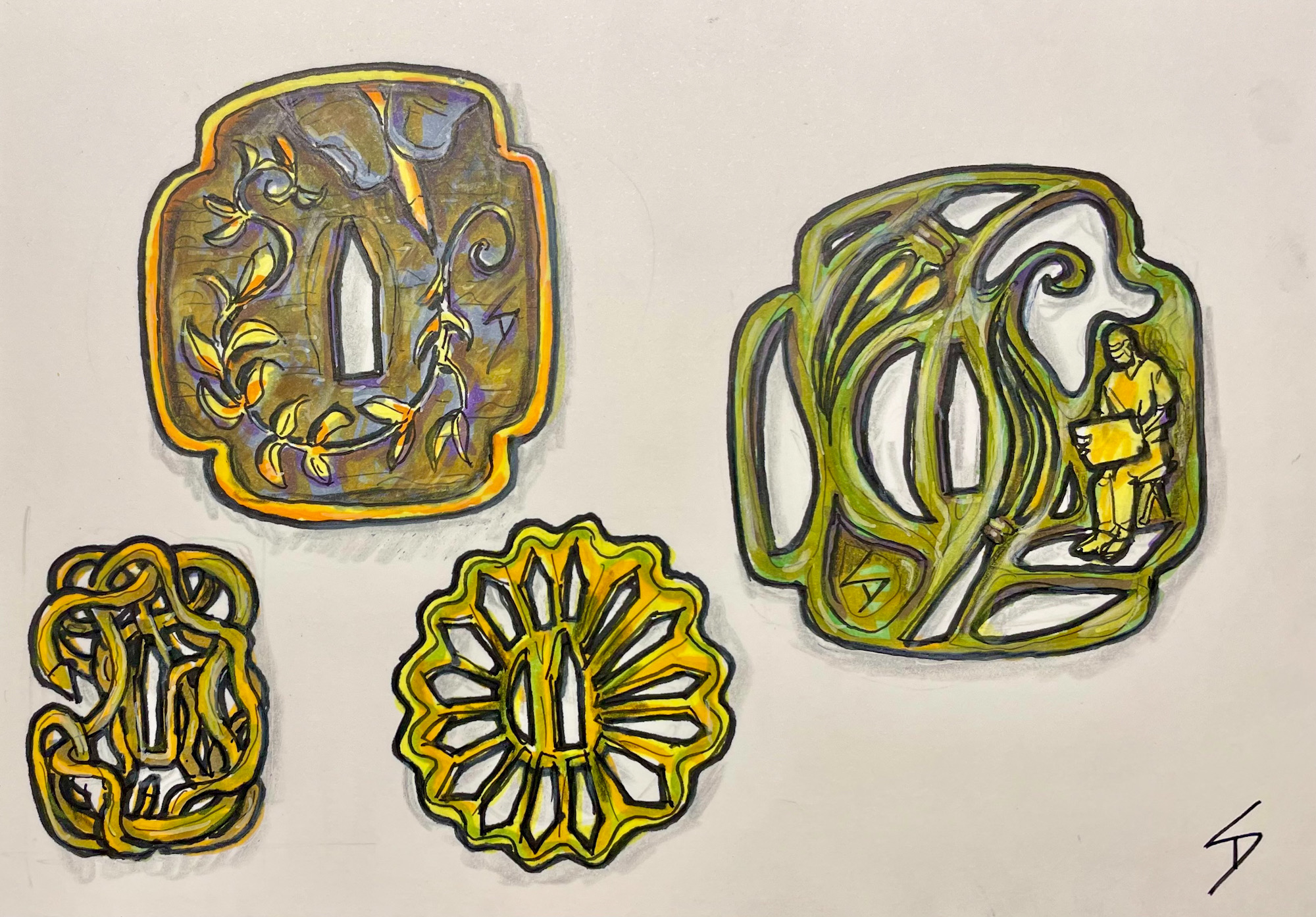
- Media: Pencil, Pen, Colour Marker pens
- Location: Tokyo Japanese Sword Museum.
How to Get There:
- By Train: Take the JR Yamanote Line to Yoyogi Station, or the Toei Oedo Line to Yoyogi Station.
- From the Station: The museum is about a 10-minute walk from Yoyogi Station.
Day 13: The Serendipity of Parks
I decided to get purposely lost and discover one of Tokyo’s 2,900 parks. I stumbled upon a hidden gem, where a family with a budding artist showed great interest in my sketch. It was a wonderful, authentic moment—a true “peak behind the tourist curtain.”
Sketch 16: Secret Spaces: Sketching a Hidden Tokyo Park

- Media: Pencil, Pen, Colour Marker pens
- Location: Arisugawanomiya Memorial Park, Tokyo.
How to Get There:
- By Train: Take the Tokyo Metro Hibiya Line to Hiroo Station (H03).
- From the Station: The park is a 3-minute walk from the station. Take Exit 1 and you’ll find the main entrance.
Day 14: A Ghibli Masterpiece
I sought out the whimsical Miyazaki Nippon Clock, designed by the co-founder of Studio Ghibli, Hayao Miyazaki. This animated clock, with its unique Ghibli style, is a massive and fun work of art. I started sketching, but a heavy rainstorm forced me to finish in a nearby cafe. Thankfully, I made it back in time to see the clock’s animated show!
Sketch 17: Ghibli’s Whimsical World: A Sketch of the Miyazaki Nippon Clock
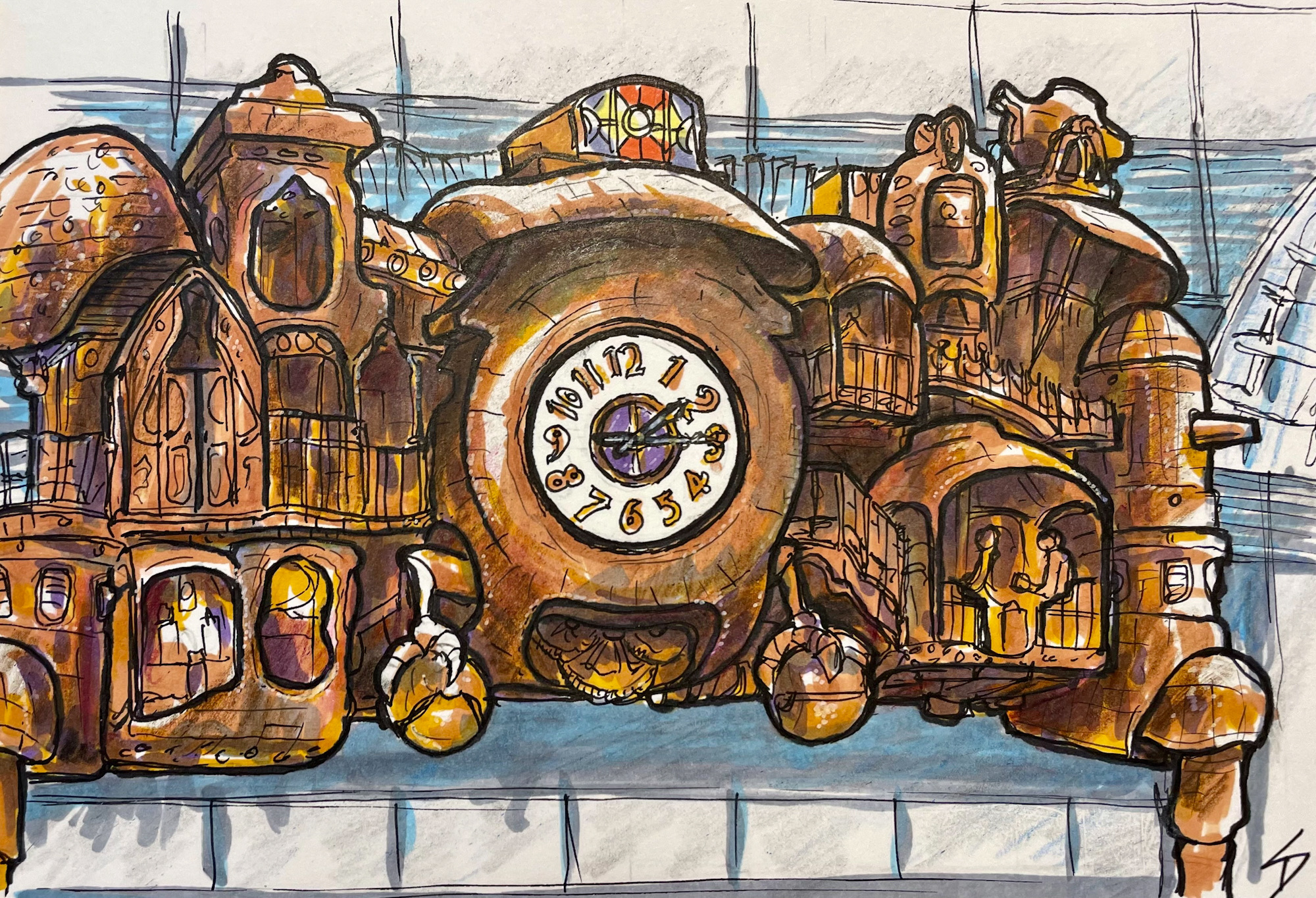
- Media: Pencil, Pen, Colour Marker pens
- Location: Shiodome, Tokyo.
How to Get There:
- By Train: Take the Toei Oedo Line to Shiodome Station (E19).
- From the Station: The clock is located outside the Nittele Tower, which is connected to the station. Look for the large, bronze structure.
Day 15: The Cat Temple of Good Fortune
For my cat-loving friends, I visited Gotokuji Temple, known as the “Cat Temple.” It’s not home to resident felines but hundreds of Maneki-neko (beckoning cat) statues that symbolize good luck. Legend says a beckoning cat once saved the temple’s founder.
Sketch 18: Good Fortune Beckons: Gotokuji, Tokyo’s “Cat Temple”
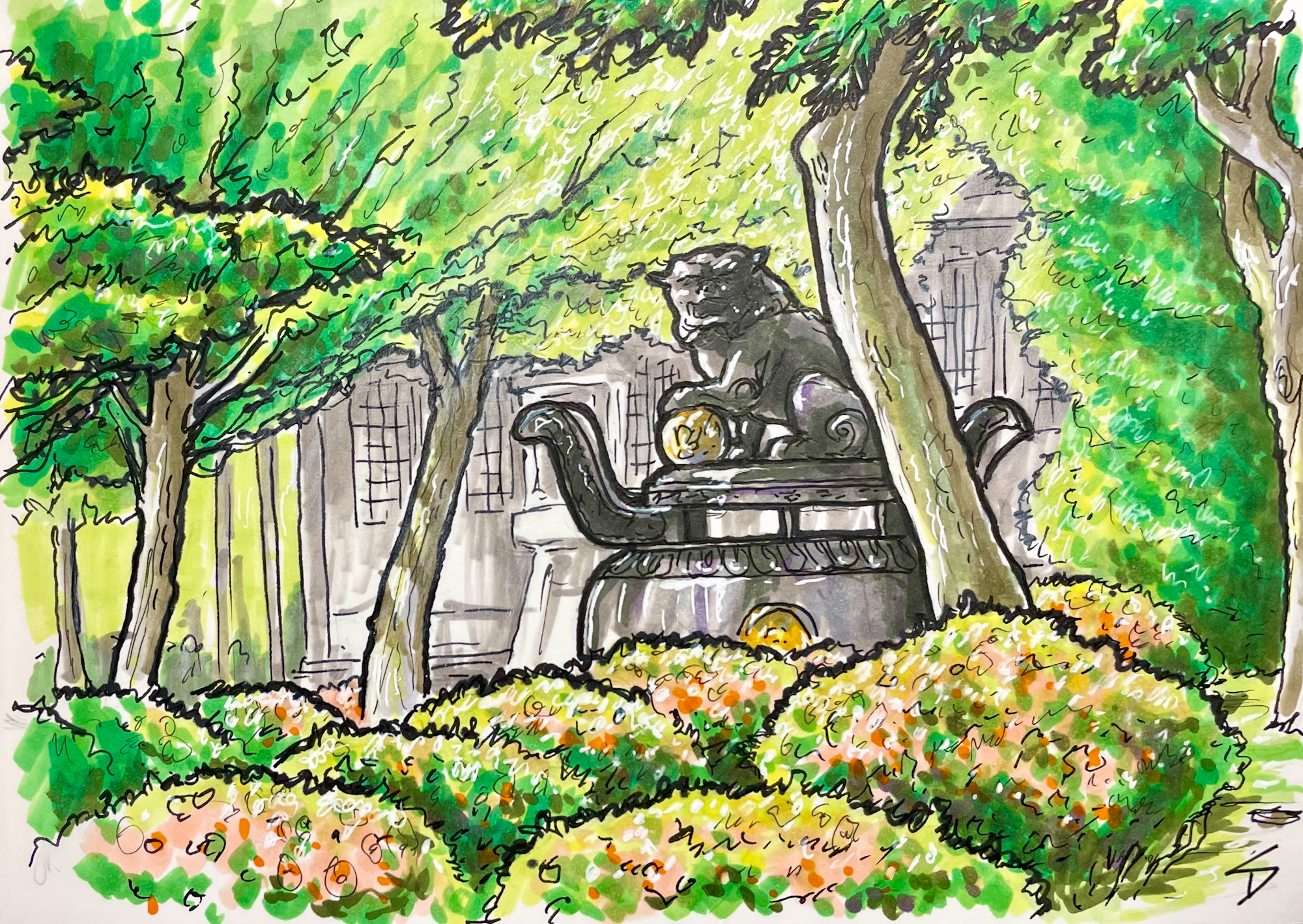
- Media: Pencil, Pen, Colour Marker pens
- Location: Gotokuji Temple, Tokyo.
How to Get There:
- By Train: Take the Odakyu Line to Gotokuji Station, or the Tokyu Setagaya Line to Miyanosaka Station.
- From the Station: The temple is about a 10-15 minute walk from either station. From Gotokuji Station, you’ll walk through a residential neighborhood. From Miyanosaka Station, it’s an easier, more direct walk.
Day 16: Harajuku from Above
I explored Takeshita Street in Harajuku, a hub of Japanese fashion and pop culture. I found a great sketching spot on a rooftop cafe at the Tokyu Plaza Harajuku shopping complex, giving me a unique vantage point high above the street.
Sketch 19: Harajuku from Above: A Rooftop View of Takeshita Street
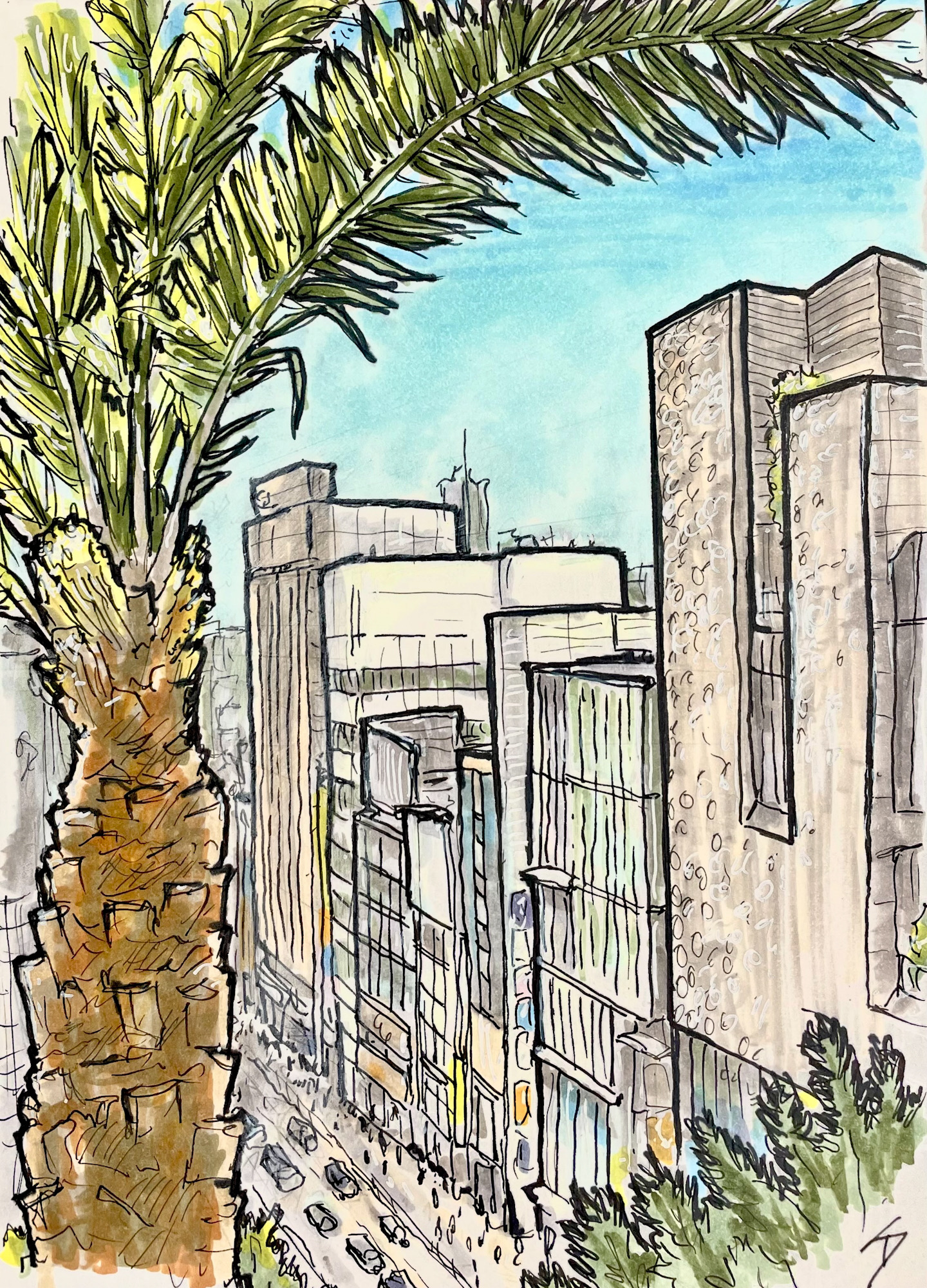
- Media: Pencil, Pen, Colour Marker pens
- Location: Takeshita Street, Harajuku, Tokyo.
How to Get There:
- By Train: Take the JR Yamanote Line to Harajuku Station.
- From the Station: The Tokyu Plaza is a 5-minute walk from the station. The entrance is distinctively mirrored and is easy to find on Omotesando street. The rooftop cafe and garden is located on the 6th and 7th floors.
Day 17: Samurai Helmets & Tea Ceremonies
I visited the Tokyo National Museum, one of the largest art museums in the world, to see the intricate samurai armor. I sketched a samurai helmet, but again, I was told I couldn’t ink the drawing inside. I finished it in a nearby cafe. The museum also houses five historic teahouses, and I was lucky to visit one, the Okyokan teahouse, which dates back to 1742.
Sketch 20: The Soul of a Warrior: A Samurai Helmet at the Tokyo National Museum
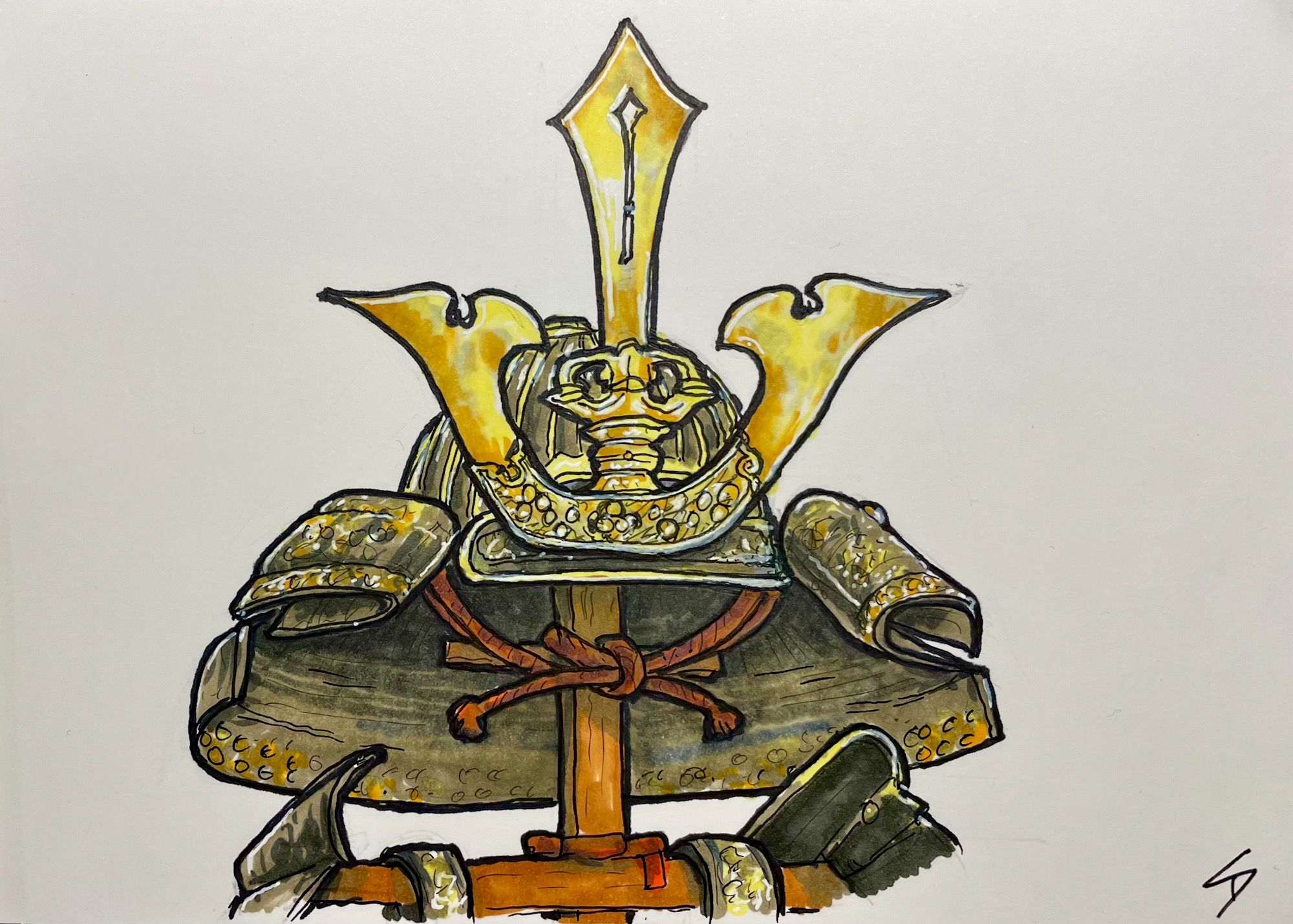
- Media: Pencil, Pen, Colour Marker pens
- Location: Tokyo National Museum, Ueno, Tokyo.
How to Get There:
- By Train: Take the JR Yamanote Line or JR Keihin-Tohoku Line to Ueno Station.
- From the Station: The museum is about a 10-minute walk from Ueno Station’s Park Exit. Follow the signs to Ueno Park, where the museum is located.
Day 18: The Crow Castle of Matsumoto
I took another bonus day trip, this time to Matsumoto City in the Japanese Alps, to see the iconic Matsumoto Castle. Nicknamed the “Crow Castle” for its black exterior, it’s one of Japan’s most well-preserved castles. I sketched it from across the moat, marveling at its history and architecture.
Sketch 21: The Crow Castle: Matsumoto Castle’s Dramatic Black Exterior

- Media: Pencil, Pen, Colour Marker pens
- Location: Matsumoto Castle, Matsumoto City, Nagano Prefecture.
How to Get There:
- By Train: From Tokyo’s Shinjuku Station, take the JR Chuo Line’s Limited Express Azusa to Matsumoto Station (around 2.5 hours).
- From the Station: The castle is a 15-minute walk from the station. The city is very walkable, and the castle is a central landmark.
Day 19: The Mikoshi of Asakusa
On my last day, I stumbled upon Miyamoto Unosuke Shoten’s Nishiasakusa store, which not only makes drums but also the mikoshi, the portable shrines used in Japanese festivals. It was a fascinating discovery, and the staff graciously allowed me to sketch and record. Little did I know, I was about to experience one of these festivals firsthand! I came back to Asakusa for my flight home, and by pure chance, I was there on the day of the Sanja Matsuri, a major Shinto festival.
Sketch 22: Colorful Traditions: A Festival Mikoshi at a Tokyo Store
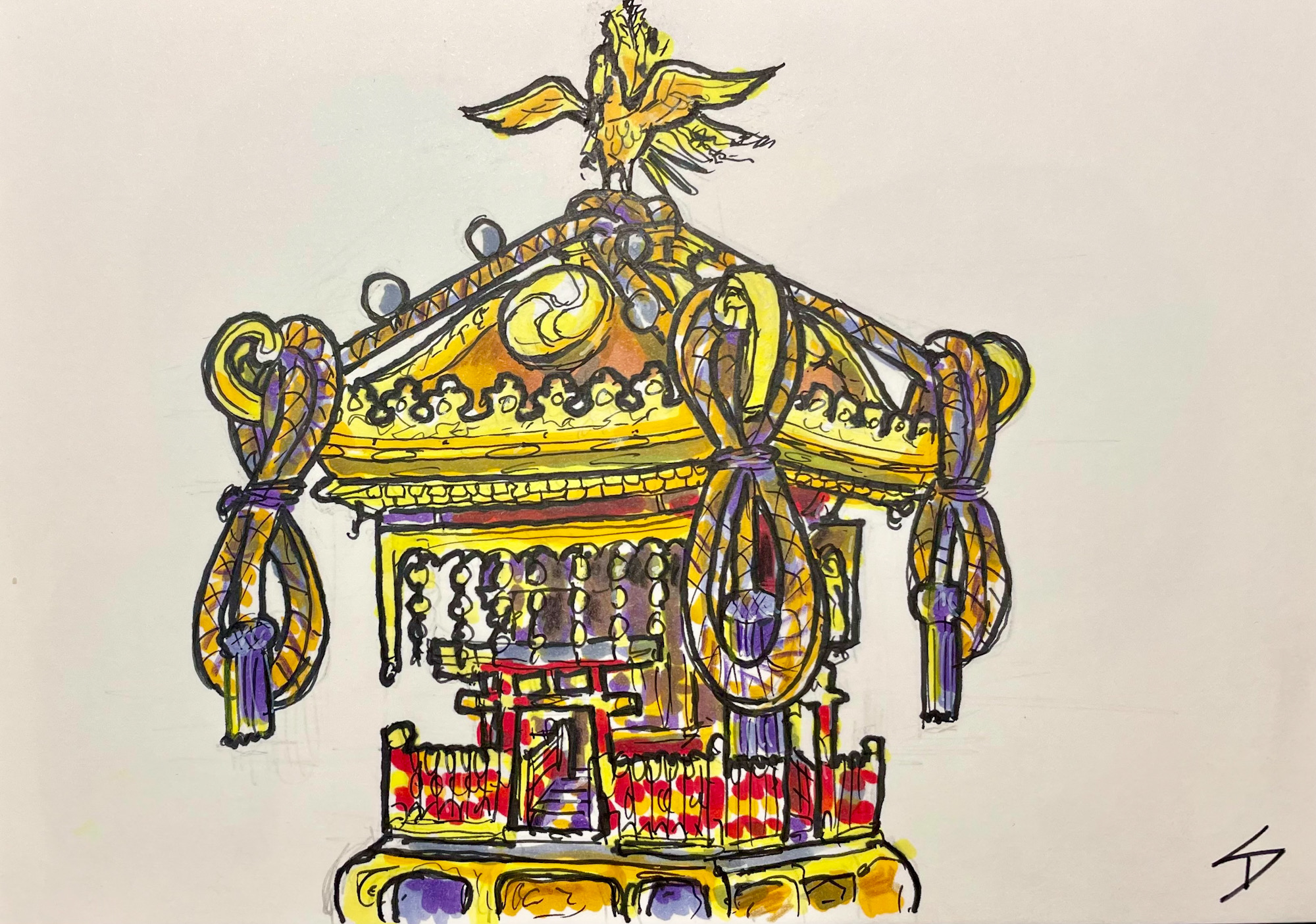
- Media: Pencil, Pen, Colour Marker pens
- Location: Miyamoto Unosuke Shoten’s Nishiasakusa store, Tokyo.
How to Get There:
- By Train: Take the Tokyo Metro Ginza Line to Asakusa Station (G19).
- From the Station: The store is a 5-minute walk from the station. Head west from the station toward the main shopping streets, and you’ll find it tucked away on a side street.
This trip was a reminder of how art allows us to see the world differently, to slow down and truly appreciate a place. From the bustling streets of Tokyo to the tranquil gardens of Kyoto, I hope my sketches capture a little piece of Japan’s magic.
Happy sketching, and sayonara!
Want to see the adventure in motion? Watch my full Japan adventure in the two-part vlog series – links below.
Discover Sketching Adventures

Something went wrong. Please refresh the page and/or try again.

Amsterdam Asia Auschwitz – Birkenau Austria Bengaluru Berlin Bern Bologna Boulder Budapest Cesky Krumlov Clear Creek County Cologne Colorado Colorado Spring Copenhagen Croatia Czech Republic Denmark Denver Dresden Europe Florence France Fujiyoshida Germany Hungary India Italy Japan Kamnik karlstejn Krakow Kyoto Latvia Leipzig Liberec Lipica Ljubljana London Malta Marianske Lazne Matsumoto Mellieha Milan Nara Netherlands North America Nuremberg Osaka Oswestry Pardubice Paris Piran Poland Postojna Prague Predjama Riga Rome Salzburg Salzburg Samobor Shrewsbury and Welshpool Slovenia Switzerland Tokyo United Kingdom United States Valletta Venice Vienna YouTube
 Sketchbook Explorer